What is MARSI?
-

Skin tears, skin stripping and tension blisters are common but avoidable examples of Medical Adhesive-Related Skin Injury (MARSI). MARSI is damage to the skin that may occur when medical adhesives are not selected, applied and/or removed properly. When you better understand MARSI, you're better equipped to protect your patients.
Recognizing the different types of MARSI.
-
 Skin TearDec 1, 1901
Wound caused by shear, friction and/or blunt force resulting in separation of skin layers. Can be partial- or full-thickness.10
-
 Skin StrippingDec 1, 1901
Removal of one or more layers of the stratum corneum following adhesive removal. Lesions are frequently shallow and irregular in shape. Skin may appear shiny.2,3,4
-
 Tension Injury or BlisterDec 1, 1901
Separation of the epidermis from the dermis caused by shear force as a result of distension of skin under an unyielding tape or dressing.3,5,6
-
 MacerationDec 1, 1901
Changes in the skin resulting from moisture being trapped against the skin for a prolonged period. Skin appears wrinkled and white/gray in color.
-
 FolliculitisDec 1, 1901
Inflammatory reaction in the hair follicle caused by shaving or entrapment of bacteria. Appears as small, inflamed elevations of skin surrounding the hair follicle.7,8,9
-
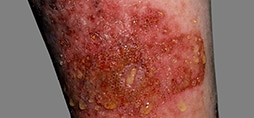 Allergic Contact DermatitisDec 1, 1901
Cell-mediated immunologic response to a component of tape adhesive or backing. Typically appears as an area of erythematous, vesicular, pruritic dermatitis.7,8,9
-
 Irritant Contact DermatitisDec 1, 1901
Non-allergic contact dermatitis that results from a chemical irritant. May appear reddened and swollen, and vesicles may be present. Typically of shorter duration.7,8


Learn about adhesives and skin protection
-
 MARSI Consensus Document
Sign up to download the MARSI consensus document, authored by 23 global leaders on skin health. The report explores:
- What MARSI is
- Why it occurs
- Who's most at risk
- Why MARSI is relevant to your practice
- How you can reduce the risk
-
 Why Medical Tape Matters
The medical adhesives you select, as well as how you apply and remove them can have a serious impact, not only on clinical outcomes, but also patient experience. This document looks at nearly 600 nurse's perspectives about medical tape usage and how the tape you use can make or break trust between you and your patient.
-
 State of skin: Elevating the science of skin management
This new report examines some of the most serious threats facing skin and provides insights into these essential care objectives:
- Maintain skin integrity
- Safe securement to skin
- Repair injured skin
- Help prevent infection
Upcoming events
What would happen if we thought about skin differently? How can skin be your secret superpower in care? Explore these questions and more during our new multi-part webinar series on the science of skin management.
-
 Browse upcoming 3M webinars
Through the 3M℠ Health Care Academy, you can register for free monthly webinars covering a wide-array of topics relevant to your clinical practice. Register for upcoming webinars, and access archives from recently conducted events.
Proven products for every patient application.
Selecting the right product for the right patient and application is an important part of MARSI risk reduction. At 3M, we have a wide variety of products designed for a variety of conditions and patient skin types, plus product selection information that makes it easy to make the right choice.


Explore how science and innovation are transforming the healthcare industry.
Other Resources


-
- McNichol L, Lund C, Rosen T, Gray M. Medical adhesives and patient safety: state of the science. Consensus statements for the assessment, prevention and treatment of adhesive-related skin injuries. J WOCN. 2013;40(4):365-380.
- Smith MA, et.al. Pressure-sensitive tape and techniques for its removal from paper. Journal of the American Institute for Conservation. 1984;23(2):101-113.
- Farris MK, et. al. Medical adhesive-related skin injury prevalence. Journal of Wound Ostomy and Continence Nursing. 2015;42(6):589-598.
- Resnick B. Wound care for the elderly. Geriatr. Nurs. (Lond.). 1993;14:26-29.
- Gerhardt LC, et. al. Skin-textile friction and skin elasticity. Skin research and technology: official journal of International Society for Bioengineering and the Skin. 2009;15(3):288-298.
- Shannon ML, Lehman CA. Protecting the skin of the elderly patient in the intensive care unit. Crit. Care Nurs. Clin. North Am. 1996;8(1):17-28.
- McNichol L, Lund C, Rosen T, Gray M. Medical adhesives and patient safety: state of the science. Consensus statements for the assessment, prevention and treatment of adhesive-related skin injuries. J WOCN. 2013;40(4):365-380.
- Lund C. Medical Adhesives in the NICU. Newborn Infant. Nurs. Rev. 2014;14(4):160-165.
- Holbrook KA. A histological comparison of infant and adult skin. In: Maibach HI, Boisits EK, eds. Neonatal skin: structure and function. 1982.
- Lund CH, Tucker JA. Adhesion and newborn skin In: Hoath SB, Maibach HI eds. Neonatal skin: Structure and Function. 2nd ed. New York, NY: Marcel Dekker:2003:200-324.
